
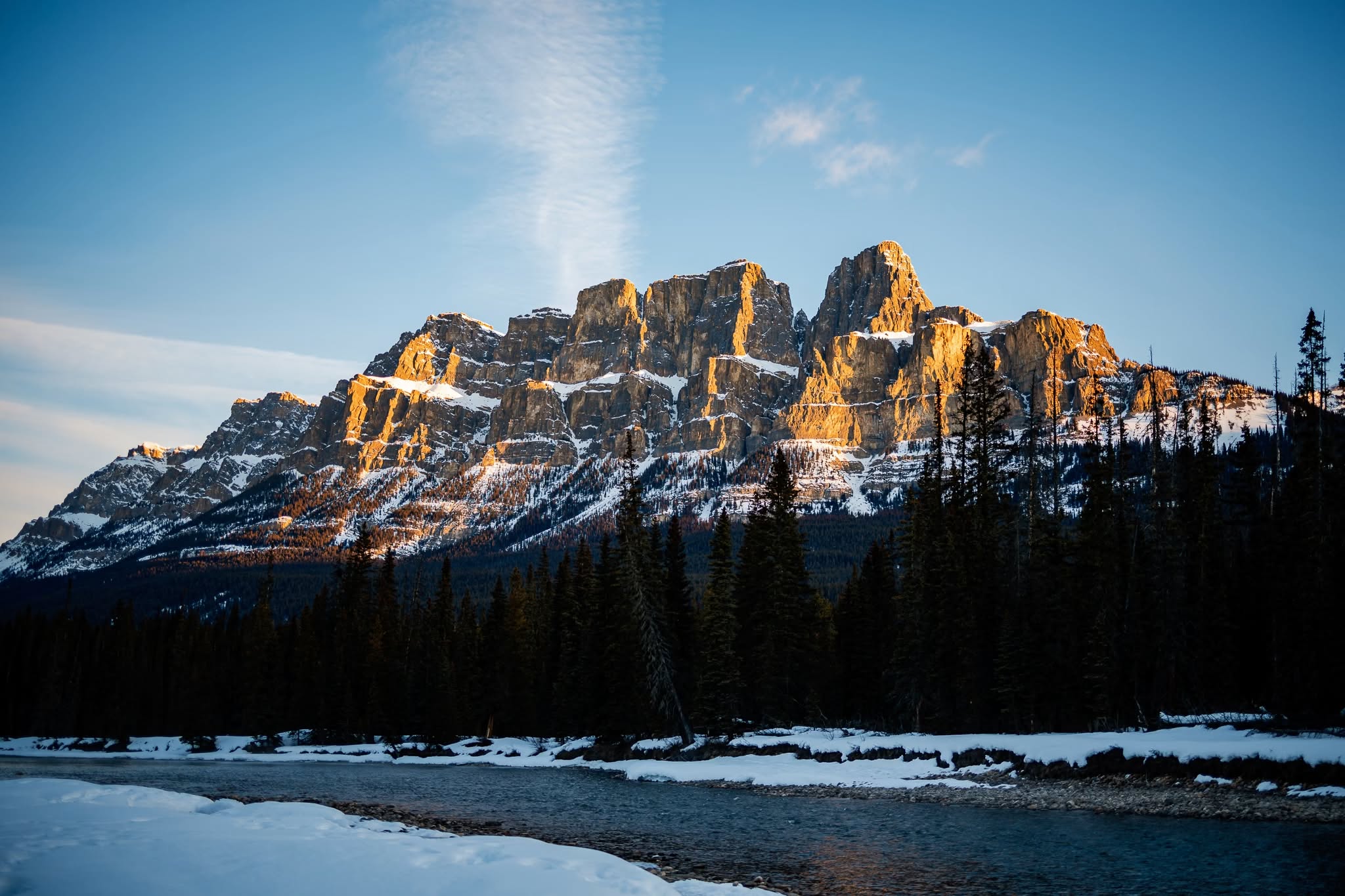
This year I introduced a new series on my social media channels of informal chats with craft distillers around the world.
Each month I’ll introduce a label that may not be as well known as others, but all have a great story to tell and the spirits to back it up.
A few weeks ago I had a lovely conversation with Matt Widmer co-founder of Wild Life Distillery located in Canmore deep in the Canadian Rockies, an hour or so north of Banff.
They make vodka and gin of course, but their whiskey is really interesting, due to their location.

Why Wild Life Distillery’s whiskey gets stronger in the barrel
In most of the whiskey world, a barrel loses strength as it ages. At Wildlife Distillery in Canmore, Alberta, the opposite happens: the alcohol content in the cask climbs by roughly a percent a year. Matt says the cause is the air.
Alberta is very dry, and where they are located at about 4,300 feet the atmosphere pulls water out of the wood before it pulls alcohol. The distillery loses plenty of total volume to evaporation, but what stays in the barrel gets stronger.
That quirk is a good entry point to the whole operation, because Wildlife makes nearly every decision the same way: it works out what the place gives you, then decides where to stay local and where to go elsewhere.
A handshake at a backcountry campsite
Widmer grew up in Banff, and his co-founder Keith Robinson grew up in Canmore. Widmer’s Swiss father came over as a ski instructor in the 1960s, looked at Banff, and decided to move his life there. The family ran Ticino, a Swiss-Italian restaurant, for more than 40 years.
The distillery began as a handshake about 13 or 14 years ago, at a backcountry camp spot while the two shared a jar of whiskey. It took a few years to get operational and has been open for coming up on ten. Vodka came first, gins followed quickly, and now there is a range of gins and whiskeys.

The team is about 16 full-time people: four distillers, around five in sales, two in marketing, about four in the tasting room, plus the two founders.
The equipment sits right out the back door. A 4,000-litre still with two columns of 18 trays each makes the vodka. Its pot can also be run with the columns bypassed, which is how the whiskey gets made. A separate 1,000-litre gin still has a Carterhead-style vapor basket off to the side.
Local grain and water, imported botanicals
The base spirit is entirely local. The grain comes from within about two hours, in the heart of Alberta grain country, and the water is Rocky Mountain water at the doorstep.
The wheat whiskey, a fan favorite for years, runs on a three-grain mash bill of 61% wheat, 26% barley and 13% rye. The vodka is 90% wheat and 10% malted barley, with a slightly sweet, cool mouthfeel Widmer pitches as a great martini vodka.
Gin goes the other way.
Alberta juniper doesn’t have the flavour profile of European juniper, so the team tested sources and settled on Bulgarian juniper. They tried Indian and Moroccan coriander and picked Moroccan for being less green and more rounded.
Spices come from Canadian purveyors, but the ingredients themselves are not Canadian. Fresh citrus goes into the still, and the classic gin stays juniper and citrus forward rather than floral or herbal.
With gin, we went with high quality ingredient versus regionality.
Once a year, Wildlife does the reverse. The Alberta botanical gin is 100% from the province, with wild-foraged Labrador tea, cow parsnip and yarrow. Widmer is candid about the result: Alberta doesn’t have an abundance of fresh, juicy botanicals, so the gin is dry, earthy, herbaceous and savory. It works, but it’s for the real hardcore gin person.
Dry on purpose
The same restraint shows up in the core range. The gins are dry, clean and traditional, and the reasoning is practical.
He noted that you can always add sweetness at the bar if you want to, but it’s hard to go back.
That logic makes the spirits easy for bars and restaurants to build on, and it feeds the custom work. Rundle, a London dry-style gin colored with butterfly pea flower, is a private label for the Fairmont Banff Springs (fun fact I worked there for some while back in the day!). Chateau Lake Louise gets two gins: a bright, lime-forward, dry one that suits a martini, and a Saskatoon-infused winter gin.
A black vodka was made for 4296, a restaurant in Canmore.

Aging in a high, dry warehouse
The warehouse is temperature and humidity controlled to temper the climate. The barrels are mostly 200-litre American oak. Wheat and rye go into new Kentucky oak, while the single malts go into ex-bourbon casks. Canadian law requires three years to call a spirit whiskey, and Wildlife’s mostly run three and a half to four, with some older. A peated single malt, six years old, is about a month from release.
The most interesting bottle is the annual Wildcask: one or two barrels, 300 to 500 bottles, never repeated. The last one was a peated maple rye, 100% rye rested in barrels that had held peated single malt and maple syrup. It won rye whiskey of the year at the Canadian Whisky Awards. The next release is expected around February or March, and the cask hasn’t been picked yet.
“You gotta be crazy enough to do this. You gotta be smart enough to stay in business,” he said. So true of distillers everywhere!
Staying home, for now
Wildlife has stayed close to home on purpose. Shipping outside Alberta carries much heavier extra-provincial tax, and each time the team felt ready to export, something intervened, first COVID and then US tariffs. Widmer says they were glad each time not to have stuck their neck out.
The tasting room, listed as Wildlife Distillery Cocktail Bar, carries 10 to 12 distinct spirits at any time, more than any store.
Their newsletter, Wildlife Insiders, gets first access to new releases -which you can sign up up via their website.
A lifestyle brand for the people who live there
Widmer describes the brand as a lifestyle, with wildlife as two words: the mountains and the people. The back of each bottle tells the founders’ story and what’s inside. The spirits have collected about 95 awards over the decade, but he says the awards aren’t the point.
The point is the place, the ingredients and the people.
The goal is a martini after a day of skiing, or a dram of whiskey by the fire with friends.
As Matt puts it, that is why they do this: to recreate that life and stay in the mountains where they grew up.
Coming up soon are conversations with distillers from New Zealand, Italy and more, so remember to follow me on Instagram or YouTube @themartiniwhisperer.
Website: https://wildlifedistillery.ca
Socials: https://www.instagram.com/wldspirits/ and https://www.facebook.com/wldspirits/
Find my meet the Distillers series on Youtube here


Leave a Reply