
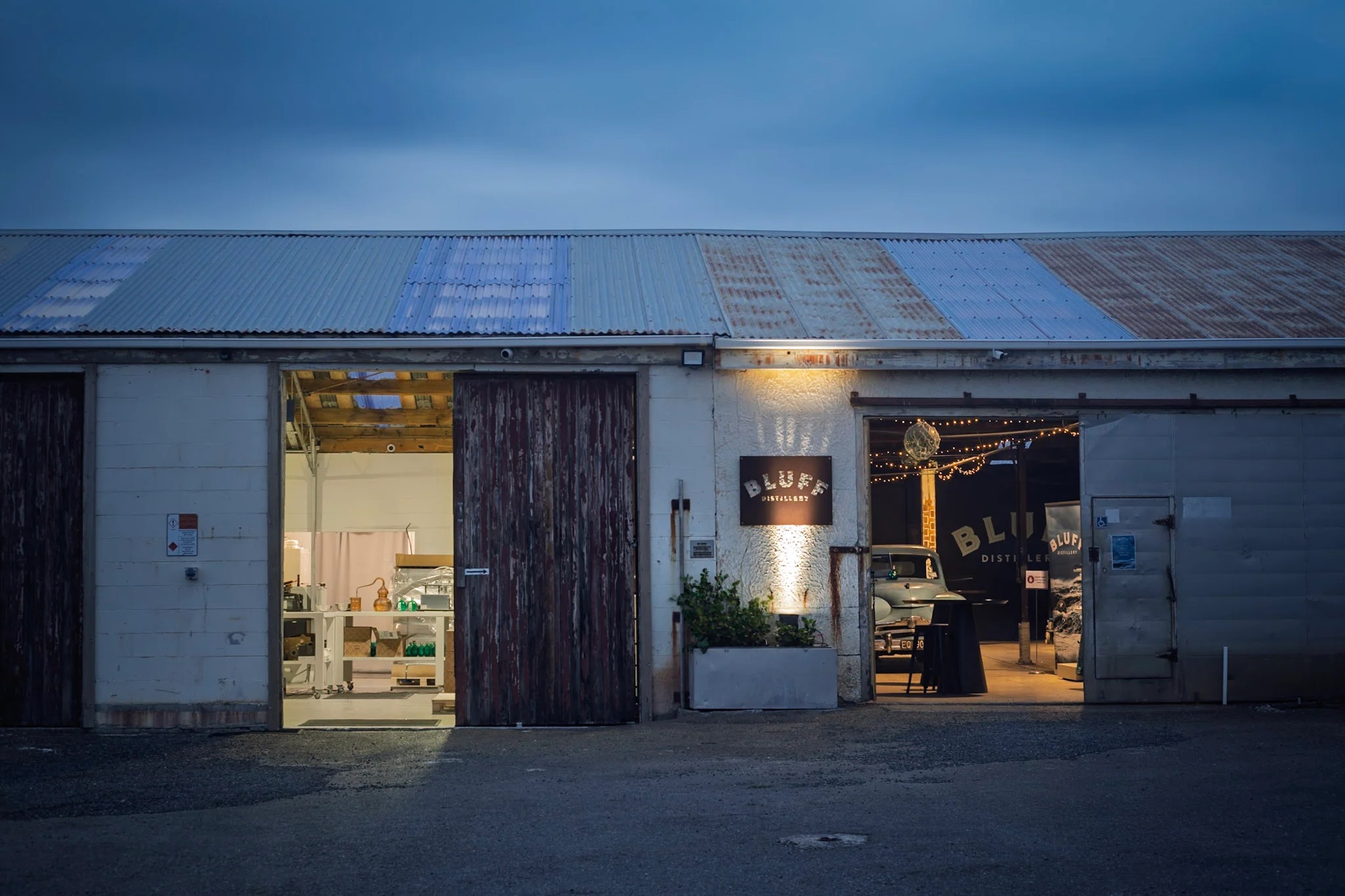
Bluff, at the southern tip of New Zealand’s South Island, has about 1,600 residents, a port, an aluminium smelter across the harbour, and a road that ends at the water.
Chris Fraser is the founder and general manager of this unique distillery and it is located, just thirty meters from the ocean on one side, and a hundred and fifty from it on the other, on a strip of land narrow enough to count as an isthmus.
Last year the wind hit 200 kilometers an hour, the power went out three times in a week, and everyone on site ended up in the one safe room at the distillery with a bottle of gin, a bottle of whiskey and a deck of cards.

That is the setting the gin is built around, and Chris treats it as an ingredient rather than a backdrop.
The coast is part of the recipe
The botanicals are classic: juniper from North Macedonia, coriander seed, iris root and liquorice root, with dried lemongrass and hibiscus as the one push beyond tradition.
Chris is explicit about why he stayed with proven ingredients. Volunteers are replanting Motupōhue, the 350-meter hill that rises straight out of the sea behind the distillery, and foraging native plants nearby would stress the very land they are trying to restore.
New Zealand has a wide range of native botanicals other distillers use, but exporting them means paperwork in every destination country.
A classic whey based spirit for a generous mouth feel, and the mix of botanicals is classic London Dry to ensure a versatile spirit, since you can add flavour to a plain gin but you cannot take it out of a flavoured one.
The unique salinity notes comes from time and weather. Botanicals are bought at least six months ahead and sit in the building breathing salt air. After distilling, the gin rests in tanks for a few weeks.
Chris describes salt spray that gets into everything and rusts whatever it touches. The base spirit is a wave base spirit, the water is reverse osmosis, and the still runs slowly. Plenty of distillers say run it hard and fast, Chris says, and he doesn’t.
Good things take time.
The climate pushes back on that patience. Winter bottling happens at four degrees on a good day and minus five on a bad one. Swings in atmospheric pressure change the boil time on the still.
Keeping the flavour consistent as volume grows is, in his words, the big piece of the job.

A bottle modeled on a Japanese fishing buoy
None of the founders came from the drinks industry. Chris was a beekeeper, another partner farms abalone, and everyone had launched products before. That gave them what he calls an eyes-wide-open approach and, in the host’s reading, a useful distance from the passion that blinds some distillers to commercial limits.
The bottle is modeled on a Japanese glass fishing buoy, with a cork on top and gin written on the front. Getting from that concept to a first physical bottle took two and a half years. Nobody would make it until a factory in China run by French owners agreed to try, and then it took another year. The first 350 bottles were flown in and sold out on day one.
Awards as a distribution strategy
The gin launched in March 2024. About three months later Chris saw the Australian Gin Awards taking entries, pulled a few bottles off the shelf and sent them over.
They won Best Dry Gin and Best in Show, six months after the company started. Thirty or forty local stores signed on within the first couple of months, and the medals did the rest: about 500 stores across New Zealand now, plus restaurants and bars, and a brand ambassador working the Auckland bar scene.

He is clear that the awards are a deliberate part of how he enters foreign markets, and that they are not cheap.
“If we want to go to the US or the UK, we’ve got to go out there twelve to eighteen months before we’re ready to get some credibility in the market.”
For years the company made a single product in a single size. A second, smaller bottle arrived recently, and Chris admits it is hard for creative people to sit on their hands and keep improving one thing.
Japan is a slow burn
He has been to Japan twice in six months. Craft gin is new there, and even the gin and tonic is different, because tonic sold in Japan cannot contain quinine. Selling there involves some education, but what lands is the story.
Japanese buyers respond to the connection, the promotional videos and the moment they open the bottle and taste it.
Telling them the buoy that inspired the bottle was made by Japanese craftspeople stops people in their tracks.
His verdict on the market is plain: it is very loyal once you are in, but it takes a while, and anyone going there should expect a slow burn.
For anyone who wants to see the place itself, the distillery is about twenty minutes from Invercargill and three hours south of Queenstown.
The tasting room is in an old mechanics workshop from the oyster days, with merchandise, private events and tours of the distillery and of the abalone farm next door.
Well worth the trip I reckon, a cracking gin from one remarkable location.
You watch the full conversation on my YouTube channel here.
- Website: https://bluffdistillery.com
- Facebook: https://www.facebook.com/thebluffdistillery
- Instagram: https://www.instagram.com/bluff.distillery/

Leave a Reply